

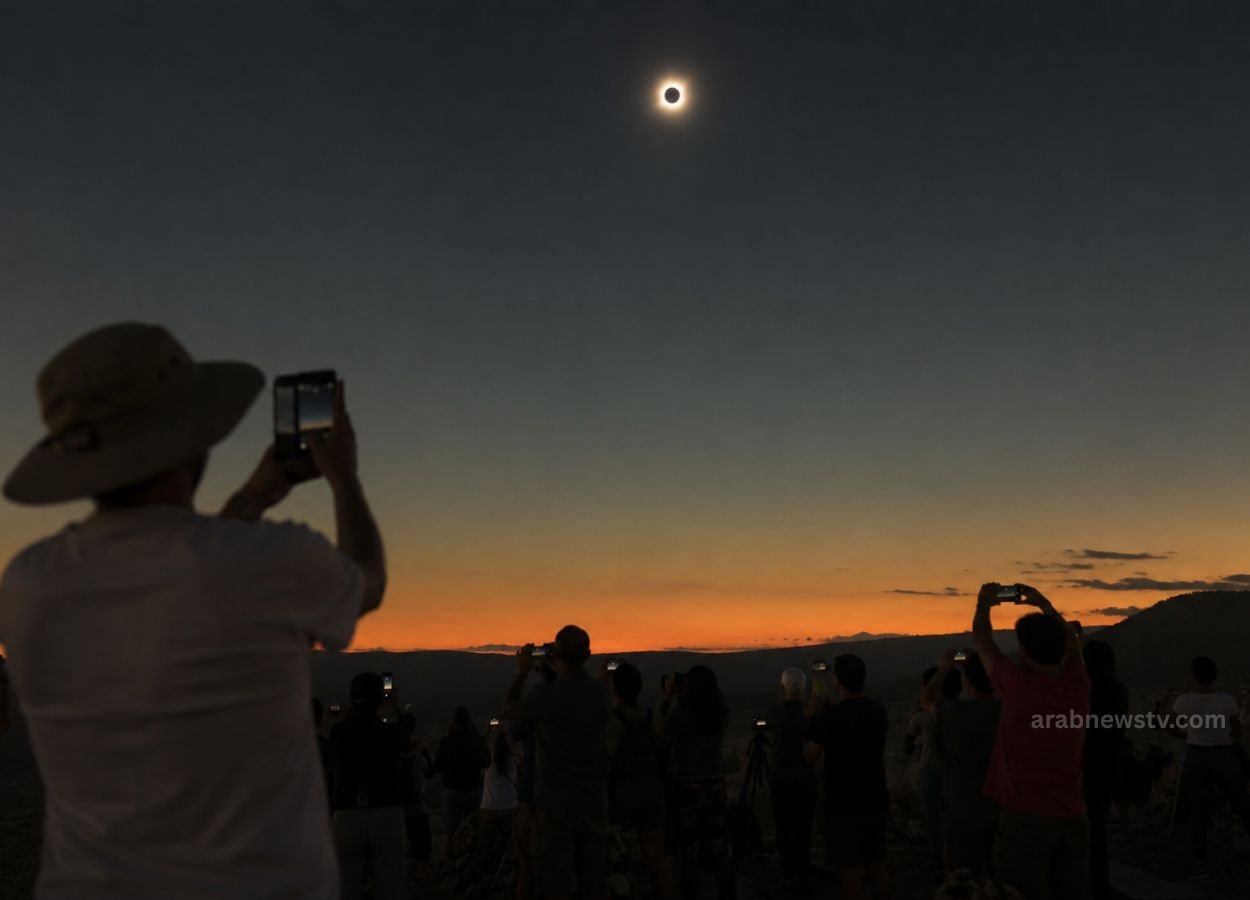
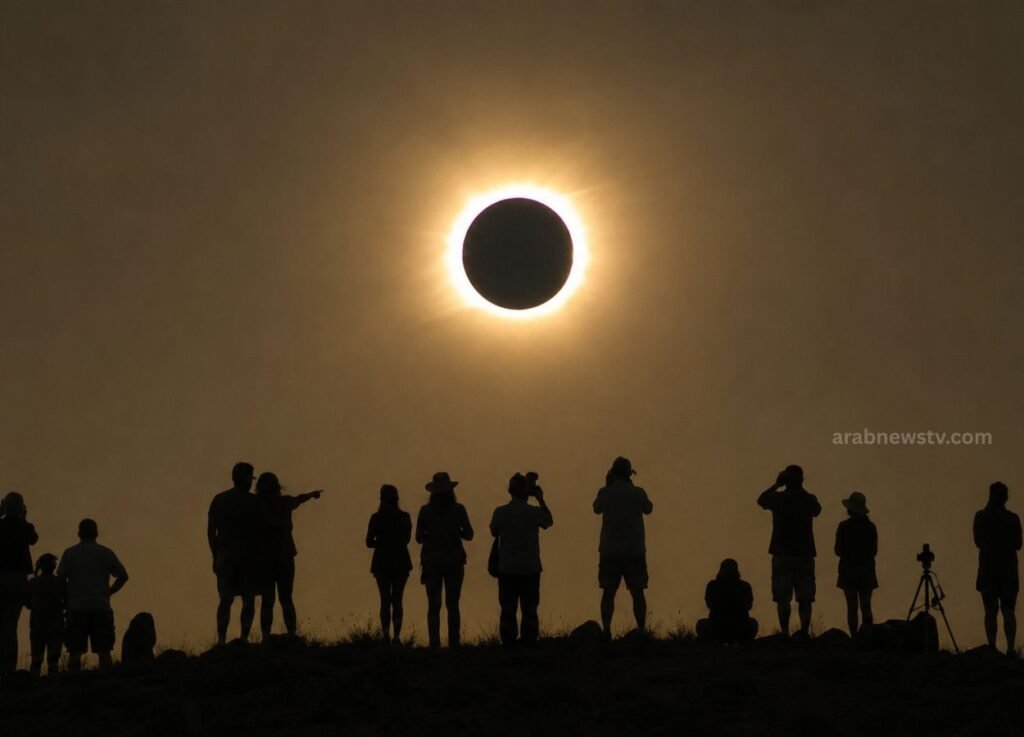
Hundreds of thousands of observers, astronomers, and astro-tourists gathered across Spain on Wednesday evening as a rare total solar eclipse swept over the Iberian Peninsula, marking the first full-scale total eclipse visible from the Spanish mainland in 121 years.
The cosmic phenomenon saw the Moon align directly between Earth and the Sun, completely blocking solar light and casting a 290-kilometer-wide shadow of totality across northern and central Spain before dipping below the horizon in a stunning “sunset eclipse”. The path of totality entered the country through Galicia and Asturias in the northwest, traversing major provinces—including León, Bilbao, Zaragoza, and Valencia before concluding over the Balearic Islands.
For nearly two minutes during peak totality, daytime turned into an eerie evening twilight, exposing the glowing solar corona and bright planetary alignments in clear summer skies. The spectacle drew an estimated 1.5 million extra travelers to viewing hotspots, filling hotel accommodations and rural observation sites across Castile and León, Aragon, and coastal regions.
The last time mainland Spain experienced a comparable full total solar eclipse was in 1905, making Wednesday’s display a generational event for regional skywatchers. International scientific groups, including teams from NASA and the European Space Agency, set up high-powered observation equipment across Spanish villages to record solar atmospheric dynamics and coronal mass ejection activity.
Astronomers note that Wednesday’s event serves as the opening act of what scientists term the “Iberian eclipse triad”. Spain is scheduled to host a second total solar eclipse on August 2, 2027, followed by an annular solar eclipse in January 2028, positioning the nation as a global focal point for astronomical observation over the next two years.