

Eight of the world’s largest oil producers posted a combined $93 billion in second-quarter net profits nearly double their earnings from the same period last year as the military conflict involving Iran and the subsequent blockade of the Strait of Hormuz created unprecedented supply shocks across global energy markets.
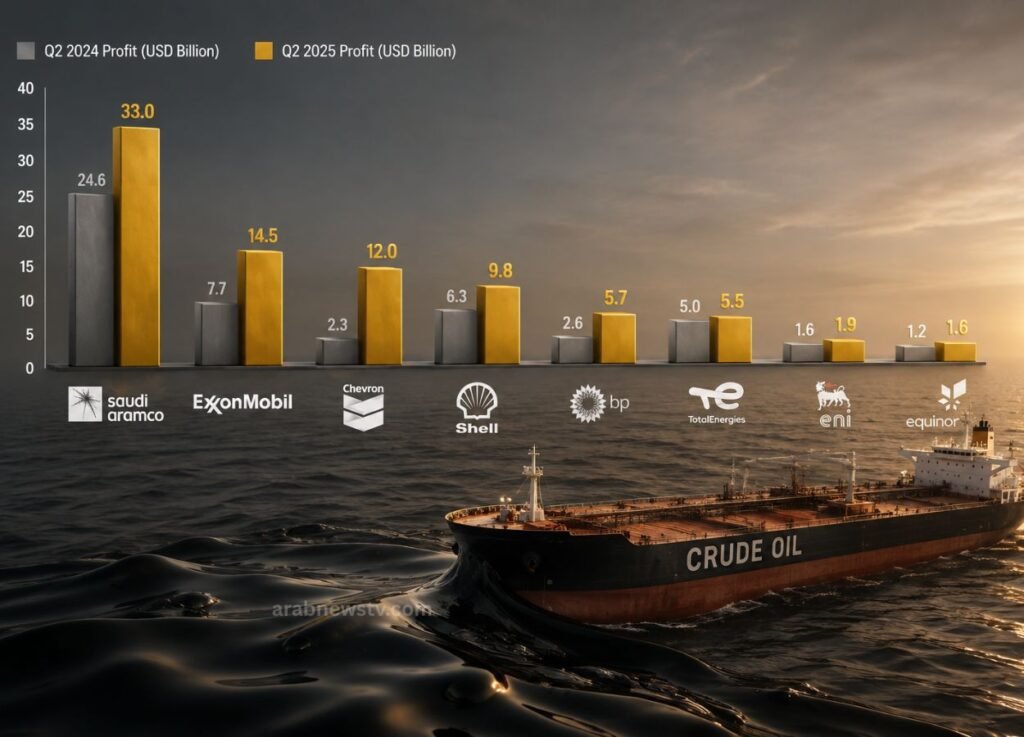
Financial reports from energy supermajors, including Saudi Aramco, ExxonMobil, Chevron, Shell, BP, TotalEnergies, Eni, and Equinor show that combined profits surged from just under $50 billion in Q2 2025. The International Energy Agency (IEA) described the supply bottleneck as the largest disruption of fossil fuel flows in market history, after crude and refined product shipments through the vital Hormuz maritime corridor were reduced to a near-standstill. The severe trade bottleneck drove Brent crude from roughly $68 a barrel in late February to peaks approaching $100 a barrel in May, delivering a lucrative windfall for international producers.
State-owned Saudi Aramco reported the single largest haul, with second-quarter net income rising 34 percent to over $33 billion, bolstered by record sales volumes despite regional drone and missile strikes targeting energy infrastructure. U.S. giants also logged multi-year highs; ExxonMobil brought in $14.5 billion, while Chevron posted $12 billion in adjusted earnings a fivefold increase from a year earlier, fueled primarily by its upstream exploration and production arms. European majors similarly capitalized on tight global supply, with Shell recording $9.84 billion and BP generating $5.73 billion, marking BP’s highest quarterly profit since late 2022.
The massive quarterly earnings have sparked sharp political pushback and renewed calls from environmental watchdogs for emergency windfall taxes. Campaign groups criticized the supermajors for capitalizing on geopolitical instability and household energy burdens, pointing out that the eight companies generated over $700,000 in profit every minute throughout the spring quarter while their collective market valuations ballooned past $3 trillion.